
Maintenance and upkeep
Valle Salado » Get to know the Salt Valley » The Foundation » Maintenance and upkeep
The salt architecture generated in the Salt Valley throughout its history is unique in the world, not only because of the architectural solutions that the salt makers had to develop to adapt a traditional salt exploitation to a landscape of special orography, but also because of achieving a sustainable space in perfect environmental and ecological balance.

The lack of profitability of salt production in Añana since the late nineteenth century caused the salt makers to fight with all means to try to make their product more competitive in a market that only valued quantity and not quality. Between 1885 and 1960, 1,085 production beds were built, which meant expanding the area destined for the salt crystallization process from 89,434 square meters to 110,700.
In spite of this, in reality there was no increase in its limits, but rather the already existing surface area was massified in spaces considered for centuries by the “know-how” of the salt industry as not suitable for construction. Eras were built on the wells, on the internal communication routes of the valley and even partially occupied the riverbed despite the danger that this entailed due to water floods.
For the first time and in an attempt to reduce costs, new materials were introduced, such as cement in the 1930s, which minimized the continuous maintenance process that had traditionally been carried out. This broke one of the basic principles of the process: the use of only reusable materials, key to the survival of the Salt Valley for millennia.
As was to be expected, the change in some of the rules of the “know-how” of the salt industry caused the situation and the state of the valley to worsen. Between 1960 and 2000, the year in which the Public Administrations began to intervene in the Salt Valley, the situation worsened mainly for two reasons.
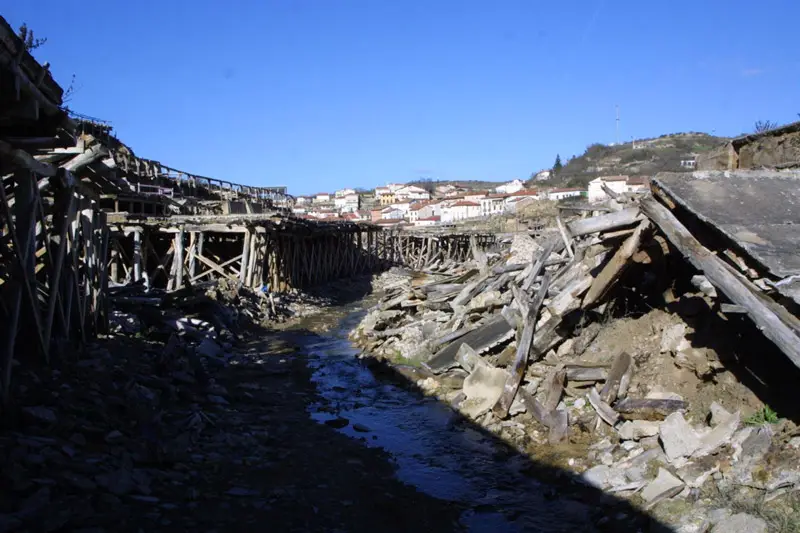
The first is that its architecture deteriorated due to the decrease in salt production and the consequent lack of maintenance. It must be taken into account that, on the one hand, the landscape began to fill with rubble from cement threshing floors that were not removed from the salt pans due to their high cost. On the other hand, the decrease in production meant that the salt water, a natural preservative of the wooden structures, ceased to act.

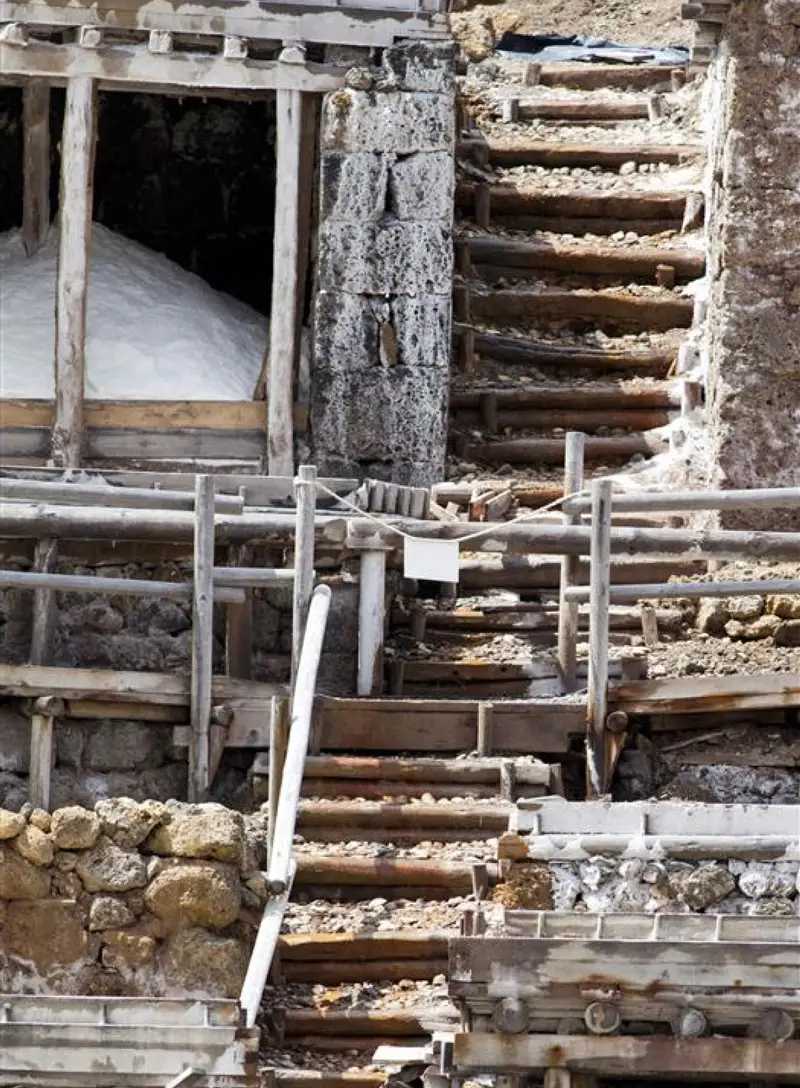
The production of salt has remained uninterrupted throughout the history of the Salt Valley, but was accommodated to the needs of the markets that, during the last part of the twentieth century, requested less salt from Añana due to its high price. Thus, between 1960 and 1977 the valley as a whole produced around 4,000 tons of salt. In 1979, about 2,800. In 1984 it was reduced to 1,338 and, between 1983 and 2000, the year in which the “Integral Recovery Master Plan” began, the average production was around 600 tons. In some years, the salt works had so much salt remaining in the warehouses that production work was reduced to a minimum and the work was focused mainly on the conservation and maintenance of the productive elements in order to stop the ruin of many of the structures.
As we shall see, the development of the Master Plan and the implementation of its prescriptions, especially with the creation of the Añana Salt Valley Foundation, have meant a real turning point in the Añana salt pans, since their integrity, their continuous maintenance and their productive activity have been recovered with the old criteria of sustainability and adaptation, that is, using the wisdom that the salt workers have employed for centuries.
To carry out this work, the Salt Valley Foundation relies on the salt workers, who have traditionally worked in the salt pans, and their “know-how”; on a technical team of highly specialized architects, topographers and archaeologists; and on an exhaustive historical and planimetric documentation compiled in the Management Plan, which allows visualizing in three dimensions all the constructive elements of the salt pans and obtaining information about them by linking them to a Geographic Information System.
HALF OF THE VALLEY IS ALREADY RECOVERED AND IN OPERATION
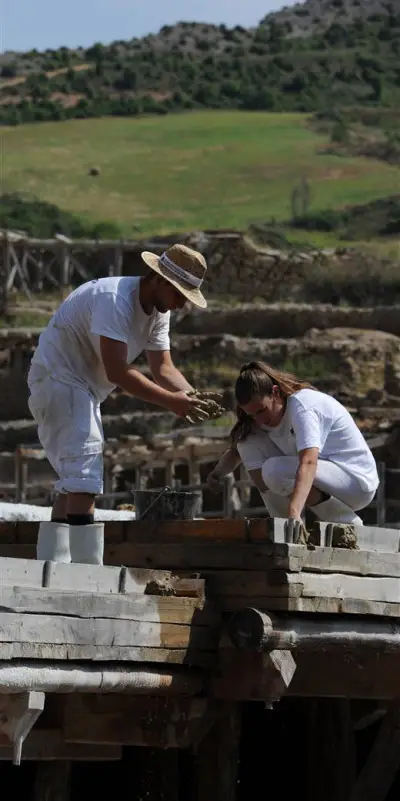
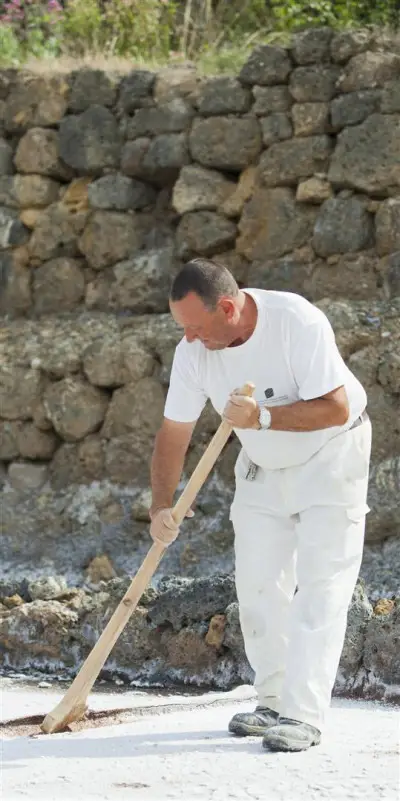
Experience has shown that the best way to keep the Salt Valley in good condition is to produce salt, since the wood is preserved for centuries by its contact with salt water. However, they have to be periodically replaced or repaired, an activity that has been carried out for centuries. The salt workers not only control the process of obtaining salt, but also supervise and build the stone and wooden structures themselves.
Although the recovery work began in 2000, it is since 2009 with the creation of the Foundation that the project has been developed to ensure the sustainability of the landscape, intervening in the fundamental part of the productive area.
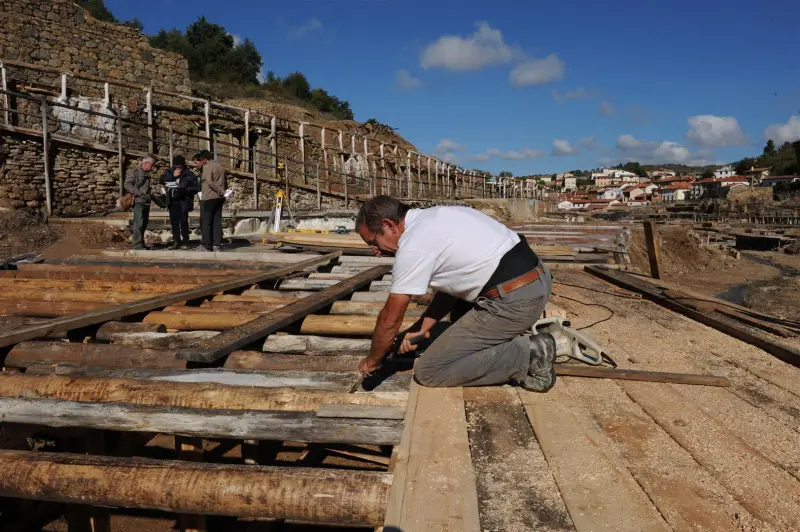

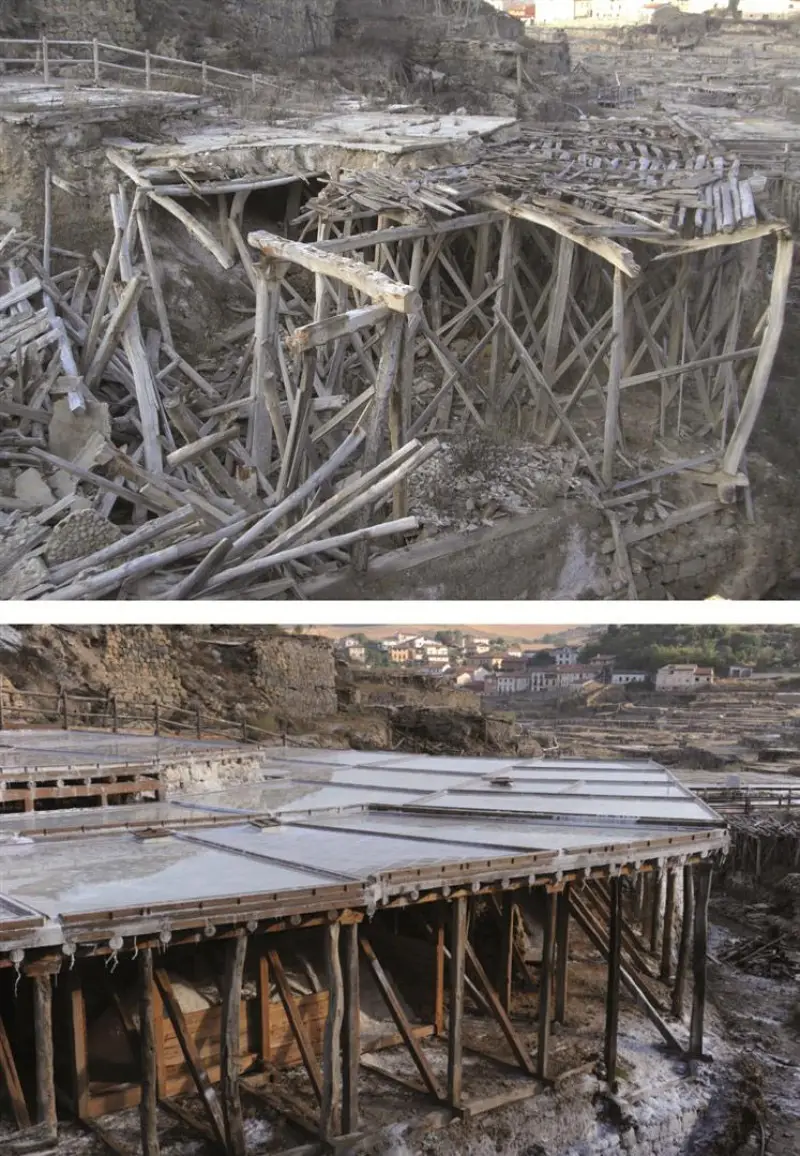
The restoration and maintenance work carried out in the Salt Valley is also a representative example of good heritage practices. They harmoniously combine the management and enhancement of all the elements present in the landscape. But they are also a pioneering model in this field, since they combine the traditional techniques of the salt “know-how”, obtained after centuries of trial and error, with the sustainable techniques and materials of modern times that have been incorporated into the project after a long process of scientific research.
El Valle Salado stands out for its scrupulous respect for traditional trades and techniques, since the same techniques that the salt workers have used for centuries are applied. These respond to a complex popular wisdom developed by the artisans themselves, in which guidelines inherited for generations are followed due to their proven effectiveness.
The authenticity of these techniques is assured both by the historical research carried out and by the fact that it is the salt workers themselves who carry out the maintenance work. In this way, the continuity and transmission of knowledge that is thousands of years old is assured, and a trade that, focused in a sustainable way towards the search for harmony with the natural environment of the Salt Valley, is becoming an option for the future for the people of the salt flats and their environment.
Two types of work can be distinguished in the recovery. Those related to salt production and those with cultural and tourist uses, related to leisure, health and gastronomy. In the first case, the projects are faithful to the salt architecture, maintaining the materials and construction techniques that the salt workers have developed for centuries but using, when necessary, modern tools.
The productive spaces of the former salt works are being treated in different ways. The big difference between them lies in the surface finish of the evaporation platforms. They can be divided into:
- clay ages with criteria of Roman and medieval times
- boulder beds with 19th century standards
- cement eras with twentieth-century criteria
- limestone eras with 21st century standards
But the Salt Valley is much more than a salt factory. It is an open landscape linked to society and the natural environment with cultural, environmental and tourist areas that are fully compatible and pose no threat to its integrity and authenticity. An example of this is the wooden structure for cultural activities or the footbath, where you can benefit from the therapeutic effects of salt water. This space is a request of the local community and an update to modern times of the threshing floors and wells where the salt workers and residents of Añana used to bathe.
New wooden warehouses have also been built to store, package and market the Añana Salt and buildings that form an essential part of the new uses of the operation are being recovered, such as the Santa Ana salt warehouse, as a multi-purpose classroom, and the Revilla salt warehouse, as a Visitor Center.