
The Salt Valley in the Interreg Sudoe Program
The Interregional Sudoe Program, officially known as the “Interreg V-B Southwest Europe Program” (SUDOE), is a territorial cooperation initiative funded by the European Union through the European Regional Development Fund (ERDF). This program aims to promote regional and transnational development in Southwestern Europe. Sudoe seeks to foster cooperation between regions of Spain, France, Portugal, and the Principality of Andorra to improve competitiveness and foster sustainable development in areas such as technological innovation, the environment, and natural resource management, among others. Interregional collaboration allows these regions to share knowledge, experiences, and resources, and address common challenges more effectively.

VALSIPAM. 2020-2023
The European territorial cooperation program InterregSudoe has approved the VALSIPAM project in its fourth call for proposals. The project aims to “promote the revitalization and sustainable tourism enhancement of Globally Important Agricultural Heritage Systems (GIHSS) and other similar territories in Europe.”
The project aims to create a network of Sipam territories in Europe aimed at designing, testing, and implementing a comprehensive model based on innovative solutions that reduce the risk of extinction of these systems.
The Añana Salt Valley was recognized by the Food and Agriculture Organization of the United Nations (FAO) as Europe’s first Globally Important Agricultural Heritage System (GIAHS). GIAHS are a tool for preserving and ensuring the future of these unique agricultural systems, which provide a combination of social, cultural, ecological, and economic services to humanity. However, they are currently subject to serious threats, including climate change, globalization, more competitive products, and the abandonment of the activity due to low profitability (which leads to depopulation and loss of biodiversity and knowledge).
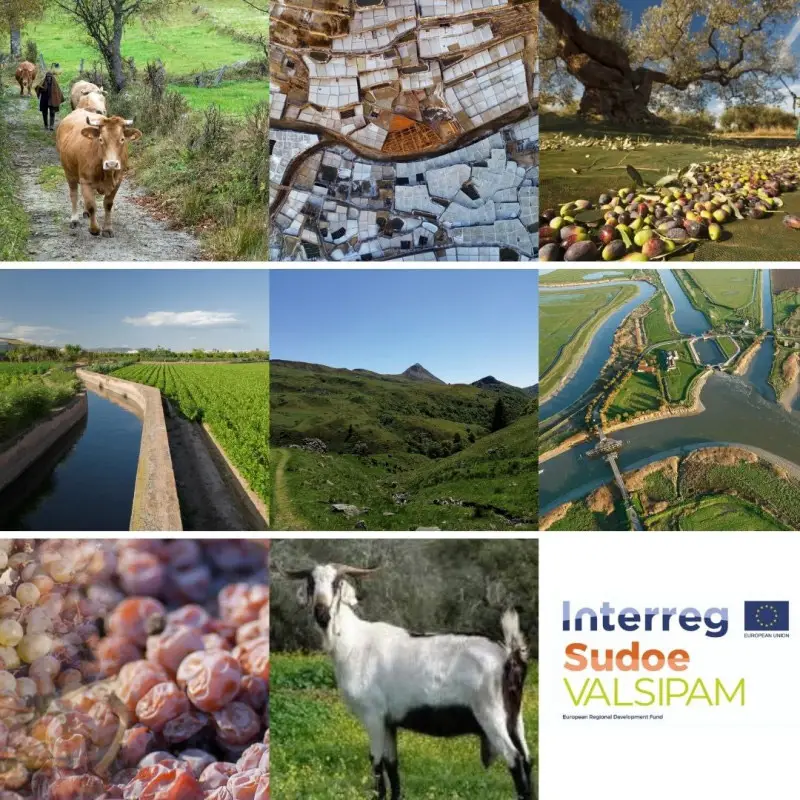
This project aims to create a network of GIAHS territories for the design, testing, and implementation of a comprehensive tourism enhancement model, featuring innovative solutions to reduce the risk of extinction of these systems. The VALSIPAM project is innovative because, for the first time in a territorial cooperation project, it addresses the challenge of exploiting the opportunities and innovation potential of unique agricultural systems with international GIAHS recognition or similar characteristics. It promotes a sustainable development model based on tourism with unique experiences closely related to GIAHS (or similar) systems, biodiversity, landscape, agricultural and forestry practices, and cultural heritage. The model will be transferable to similar agricultural systems in the SUDOE area.
Led by the Andalusian Ministry of Agriculture and with a budget of €1,140,000, VALSIPAM began its journey on November 1, 2020, and is scheduled to end on February 28, 2023. It has nine partners from three countries (Spain, Portugal, and France). Specifically, the project includes five participants from Spain (Fundación Valle Salado de Añana, Regional Government of Andalusia, Mancomunidad de la Taula del Sénia, Consorcio del Consell de L’Horta de València, and Fundación Andanatura), two from Portugal (Development Association of the Alto Támega Region and Guadiana Route-Integrated Development Association), and two from France (the Chambers of Agriculture of Charente-Maritime and Cantal).
In addition to these nine entities, there are 14 other associated entities. This international partnership brings together a total of 23 members, including local and regional authorities, local development and business support organizations, research organizations and universities, agricultural chambers, a regulatory body for Designations of Origin (DO), natural parks, and tourism associations.
Presentation video
Video presentation of results
HITTS. 2024-2026
The European territorial cooperation program InterregSudoe has approved the European HITTS (Heritage Innovation, Territory, Tourism and Sustainability) project for the revitalization of the unique cultural, natural, and heritage features of rural areas in Southern Europe.
The Añana Salt Valley, known for being the oldest functioning salt production complex in the world with an impressive history of more than 7,500 years, has achieved outstanding international recognition thanks to its exceptional restoration and enhancement project. The uniqueness and historical significance of this site have earned it multiple distinctions, including a UNESCO World Heritage nomination, the prestigious European Union/Europa Nostra Award, and its declaration by the Food and Agriculture Organization of the United Nations (FAO) as the first Globally Important Agricultural Heritage System (GIAHS) in Europe.
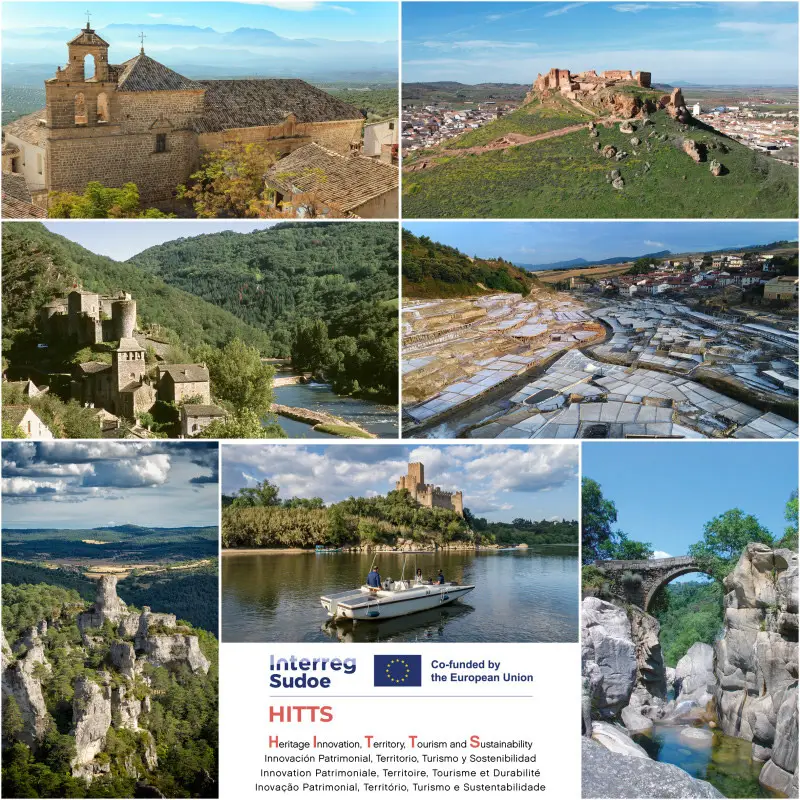
The HITTS project emerged as a response to the challenges facing the SUDOE region, including depopulation, aging, and the emigration of specialized talent. This ambitious program seeks to revitalize rural areas by showcasing their unique cultural and natural heritage characteristics. With a focus on heritage revitalization, the initiative promotes artistic creation and cooperation between the public and private sectors, employing innovative methodologies to foster ecological and sustainable tourism. HITTS proposes a transnational strategy to promote tourism, based on the utilization of heritage and the active participation of the local community in the process. Through these actions, HITTS seeks to transform the rural regions of the SUDOE region into sustainable and attractive tourist destinations, thus contributing to the economic and cultural development of the area.
Led by the Huerta de San Antonio de Úbeda Foundation, this cross-border project has a total budget of €1.6 million, 75% co-financed by the European Regional Development Fund through the Interreg Sudoe Program (Spain-Portugal-France) 2021-2027, and will run until the end of 2026. The project consortium has complementary backgrounds and experts in heritage revitalization in rural areas.
Participating on behalf of Spain are the Huerta de San Antonio Foundation (Andalusia), the Añana Salt Valley Foundation (Basque Country), the Tierra de Libertad Association (Castilla-La Mancha), and the Faculty of Tourism of the University of Murcia. Portugal is represented by the municipality of Montalegre (Alto Támega) and the Intermunicipal Community of the Médio Tejo; while France is represented by the Parc Naturel régional des Grands Causses (Occitanie Region) and the company Aven Armand – Montpellier le Vieux SA (Occitanie Region).
The project will begin with actions focused on the involvement of all stakeholders in the intervention areas, through territorial laboratories. A participatory assessment will be conducted for each territory to evaluate endogenous heritage, cultural, and artistic resources, and 15 best practices will be identified.
These eight entities are joined by 16 other associated entities. This international partnership brings together a total of 24 members, including local and regional authorities, local development and business support organizations, research organizations, and tourism associations.